Finding the weak spots
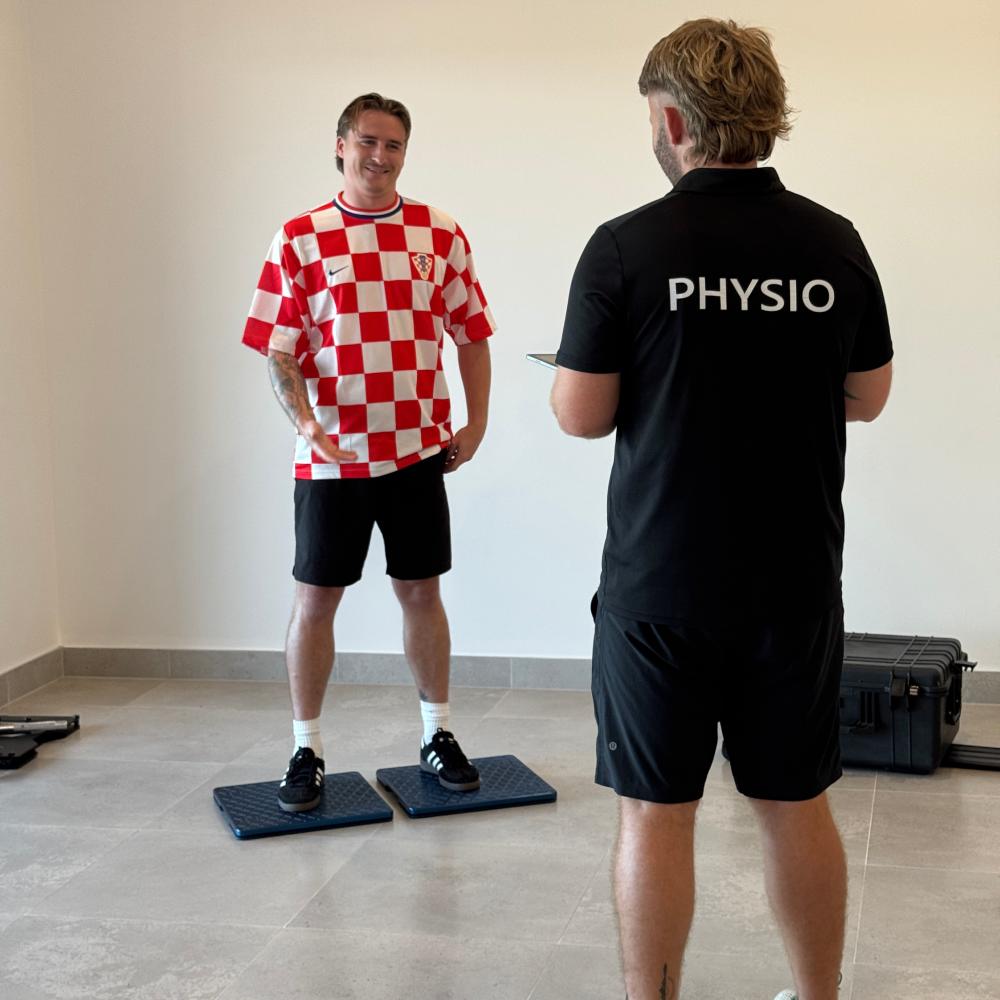
The first thing I want to do with any tradie is get actual numbers on how strong they are, rather than guessing. In the clinic I use the AxIT system from Strength by Numbers, which pairs force plates and handheld dynamometers with software that records everything. It measures how much force someone can produce and whether one side is doing more of the work than the other, and it keeps every result on file so we can track changes over time.
The main test for whole body strength is the IMTP, or isometric mid-thigh pull. The person stands on the force plates and pulls as hard as they can against a bar that doesn’t move, roughly in the position you’d be in picking something heavy up off the ground. It tells me their peak strength, how quickly they can produce it, and whether they’re favouring a leg. For someone lifting bags of cement or sheets of ply all day, that’s pretty relevant.
From there I test the lower and upper body separately. For the legs that’s things like hip, groin, hamstring and quad strength. For the upper body it’s shoulder strength in a few different positions, including overhead, plus grip strength. Grip is a really underrated one for tradies. It tends to drop off before elbow and wrist problems show up.
Because the tests are done the same way every time, they’re very repeatable. I can retest in six or eight weeks and see straight away whether the program is working, instead of relying on how someone feels. As a rough guide, if one side is more than 10 to 15 percent weaker than the other, that’s something I’d want to address.
What prevention looks like
I think of it in a bit of an order.
Strength comes first. Most tradies are strong in the positions they work in every day but have big gaps elsewhere, and that’s usually where injuries happen. A basic program would include some sort of deadlift or trap bar lift, split squats or lunges, rows, pressing, calf raises, loaded carries and some grip work. Two sessions a week of 30 to 40 minutes is enough for most people to see a difference.
Mobility comes second, and only as much as the job needs. There’s no point chasing the flexibility of a yoga teacher if you’re laying bricks. What I’m looking for is whether someone can get into the positions their work asks for without forcing it, like a deep squat for a tiler or getting the arms fully overhead for a plasterer. If they can’t, we work on it. If they can, we don’t need to spend a heap of time there. Mobility without the strength to control it doesn’t protect you much anyway.
Then it’s about what the actual job needs, and this is where it gets specific. “Tradie” covers a lot of very different work. A sparky spends a lot of time overhead and up ladders, so shoulder endurance and balance matter more for them. A tiler or floor layer is on their knees all day, so hip and knee strength in deep bent positions is the priority. A concreter or landscaper is doing heavy repeated lifting and carrying, so we focus more on back, hip and grip strength and building up how much work they can handle across a full day. Roofers need good ankle strength and balance on uneven surfaces.
That’s why I don’t love generic “tradie workouts”. Two people can both be on the tools and need completely different programs. Testing tells us where each person is weak, and knowing their trade tells us what they need to be strong for. Put the two together and you’ve got a program that’s actually worth their time.